Restaurants in Corfu Town: The Complete Guide to Authentic Food (and Where to Avoid the Tourist Traps)
Hidden tavernas, seaside fish restaurants and real local cooking — the complete guide to where to eat in Corfu Town without falling into tourist traps.

Corfu Town is one of the most beautiful port cities in Greece, but behind those photogenic Venetian alleys hides an entire culinary world that most tourists simply miss. The difference between a mediocre, overpriced meal and an unforgettable one often comes down to ten meters — the right alley, the taverna where Corfiots themselves eat, and the dish worth ordering. We spent dozens of evenings in the city, sitting both in the central squares and in tucked-away corners that only locals reach, and this guide distills what is genuinely worth your time.
The goal here is simple: to tell you exactly where to go, what to order, when, and where to avoid the classic traps that charge double for half the food.
Key Takeaways
- Location decides everything: the farther you move from the Liston and Spianada Square, the more authentic the food and the better the value.
- A real taverna is easy to spot: a short menu, no photos, changing with the daily market — that's a good sign.
- Fish is sold by weight: always have the fish weighed before ordering and agree on a price — this is the most common tourist mistake.
- Greek dinner runs late: locals dine after 9:00 PM, and that's when you'll get the best atmosphere and food.
- Must-try local dishes: sofrito, pastitsada and bourdeto — three uniquely Corfiot dishes you won't find elsewhere in Greece.
What Makes Corfu's Cuisine Unique
Before talking about specific restaurants, it's important to understand that Corfu is not "just another Greek island" when it comes to food. Centuries of Venetian rule mean the local cuisine differs fundamentally from what you'd know in Mykonos or Crete. Here you'll find deep Italian influences, a rich tomato sauce, and generous use of wine and vinegar.
Three dishes define the region: sofrito — thin slices of beef in a sauce of garlic, vinegar and parsley; pastitsada — a cut of meat (usually veal or rooster) in a spiced tomato sauce flavored with the local kokkilo spice blend, served over wide pasta; and bourdeto — fish in a spicy paprika and tomato sauce. If a restaurant serves all three and cooks them well, you're in a real place.
Insider tip: Ask the waiter which Corfiot dish they make best — an authentic place will answer immediately and with confidence. A touristy spot will point you toward a generic moussaka.
The Liston and Spianada Square: Lovely to Look At, Less So to Taste
The Liston — that grand row of arcades facing the large green square — is one of the most beautiful places in Europe to sit with a coffee. And precisely for that reason, it's not the address for a serious meal. Prices are high, the food is mediocre, and the offering is tailored to passing tourists.
What you should do here: a morning Greek coffee (a cold frappé) or an evening drink while you watch the parade of people. It's a worthwhile cultural experience, just not a culinary one.
- When to go: early morning (8:30–10:00) when the Liston is quiet and the light is golden, or the twilight hour for an aperitif.
- How long: 45 minutes for a coffee, no more.
- What to avoid: don't order a full fish dinner here. The price won't justify the result.
From the Liston, walk north toward the old town (Campiello) — within five minutes you'll enter a web of alleys where the food improves dramatically.
Campiello and the Old Town: The Heart of Authentic Food
Campiello is the oldest Venetian quarter in the city — a maze of stone steps, laundry strung between buildings, and family tavernas that have operated for generations. This is the best concentration of real food in Corfu Town.
Among the places we especially loved in the heart of the old town:
Venetian Well — an elegant restaurant in a small square around a 17th-century Venetian well. This isn't a humble taverna but a place for a special meal, with a creative menu and a serious Greek wine list. Perfect for a festive evening. Booking ahead in season is highly recommended.
To Dimarchio — in a square beside the old town hall, a spot with outdoor tables and a genuinely romantic atmosphere. The pastitsada here is excellent and the service is warm.
- Getting there: everything is on foot. The old town is closed to traffic — park at the lot near the Old Port or at Spianada Square and continue on foot.
- Best time: evening, from 8:30 PM onward, when the heat eases and the alleys fill with atmosphere.
- Insider tip: if the alley you're in is empty and quiet but holds a single taverna full of locals — that's the address. Don't be tempted by the first restaurant with menu photos at the entrance to the town.
To plan an evening that also combines a walk among the historic sites, it's worth browsing the guide to the recommended attractions in Corfu, which explains how to combine the old town with dinner.
Fish Restaurants: Where to Eat Real Seafood (and How Much It Costs)
Fish and seafood are the stars of any good Greek meal, but this is exactly where the biggest trap lies. Fresh fish is sold by weight (usually per kilo), and the final price depends on the size of the fish you choose. Many tourists order the "catch of the day" without asking and end up with a surprising bill.
The iron rule: ask to see the fish, ask to have it weighed in front of you, and agree on the total price before it's cooked. An honest restaurant will gladly do this. Anyone who dodges the question — get up and leave.
Recommended spots for fish:
- Faliraki — a seaside complex between the two fortresses, with breathtaking views over the Ionian Sea. You eat fish and seafood facing the sunset. Ask for the fresh catch of the day and be sure to confirm the price.
- Tavernas in the fishing villages — if you have a car, it's worth driving a little outside the city to villages like Boukaris or the Kontokali area, where the tavernas serve fish caught that very morning at a far fairer price than in town.
How to choose fresh fish: the eyes should be clear and bulging, the gills red, and the flesh elastic. A strong "fishy" smell is actually a bad sign.
- How long to allow: a relaxed fish meal takes two hours. Don't rush.
- What to bring: if you're driving to a fishing village in the evening — take a light jacket, it gets cooler by the sea.
If you'd like to combine the fish experience with a day at sea, consider a boat tour along the coast and finish at a fishermen's taverna in the evening — a winning combination.
Local Tavernas: A Real Meal at a Fair Price
The heart of Corfu's food isn't in the high-end restaurants but in the small family tavernas. Here you'll get the best value for money, generous portions and genuine home cooking.
What to look for in a good taverna:
| Good sign ✅ | Warning sign ❌ |
|---|---|
| A short, changing menu | A huge menu with photos |
| Locals eating there | Only tourists at the tables |
| Offers real sofrito/pastitsada | "Pizza, pasta, moussaka" for everyone |
| The owner serves you personally | Waiters pulling you in from the street |
| House wine from the barrel | Only expensive bottled wine |
Recommended:
- Pane e Souvlaki — a popular spot for souvlaki and excellent Greek pita wraps, fast and relatively cheap, perfect for lunch between sightseeing stops.
- Chrisomallis (Babis) — a veteran taverna in the center with classic home cooking. The Corfiot dishes here are completely authentic.
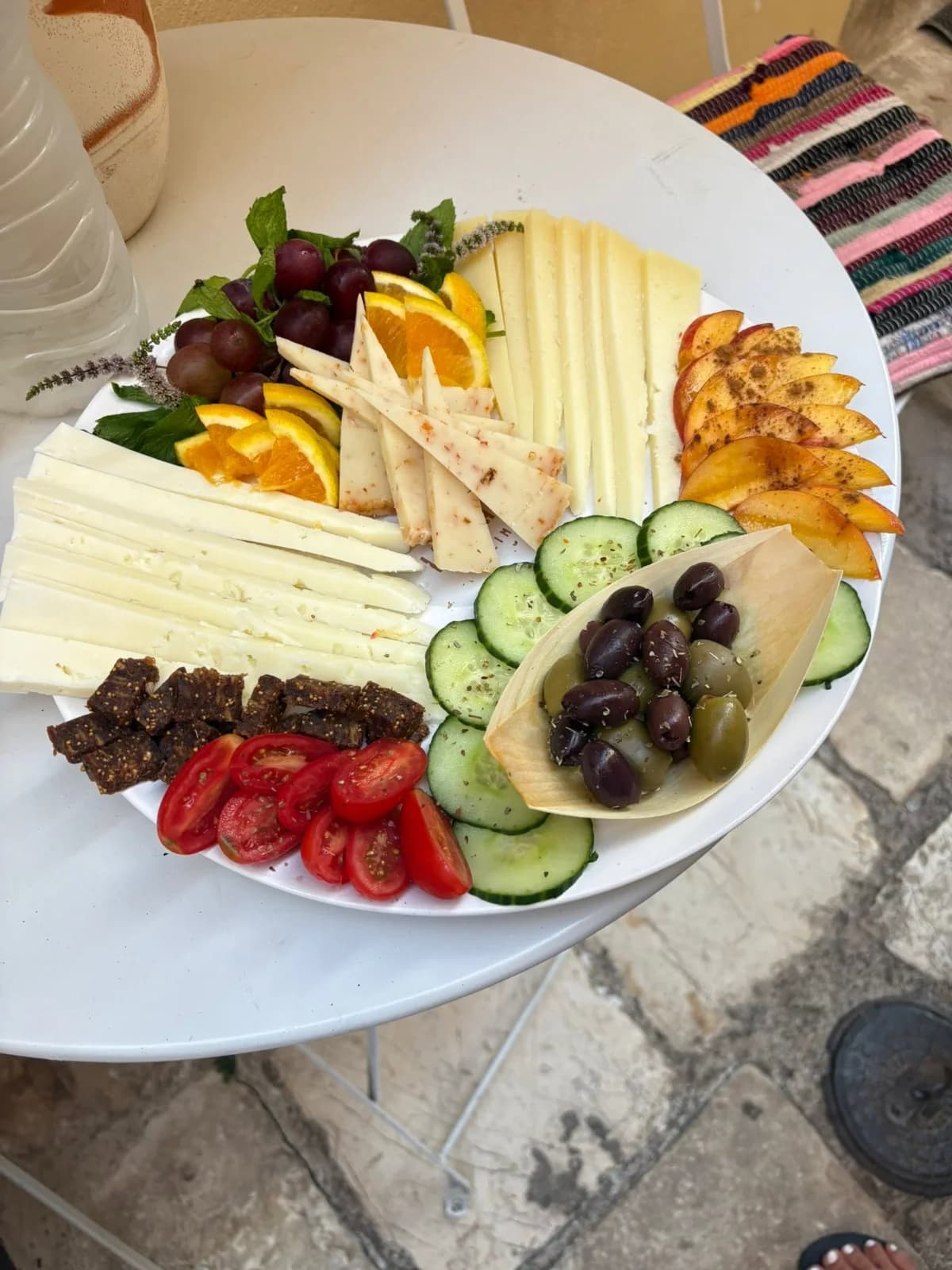
Insider tip: in a local taverna, order several mezze (small plates) to share instead of a main course for each person — tzatziki, melitzanosalata (eggplant salad), seared feta, and kolokithokeftedes (zucchini fritters). You'll eat better, taste more, and pay less.
Dining Areas Outside the Center: An Upgrade Worth the Drive
Some of the best food experiences are just a few minutes' drive outside the tourist center. If you've rented a car, this opens up a whole world. You can easily rent a car for the day in Corfu and set off on a self-guided culinary tour through the villages.
Recommended destinations:
- Paleokastritsa — about 25 minutes from the city, with fish restaurants overlooking stunning blue-green bays. Combine lunch with a swim.
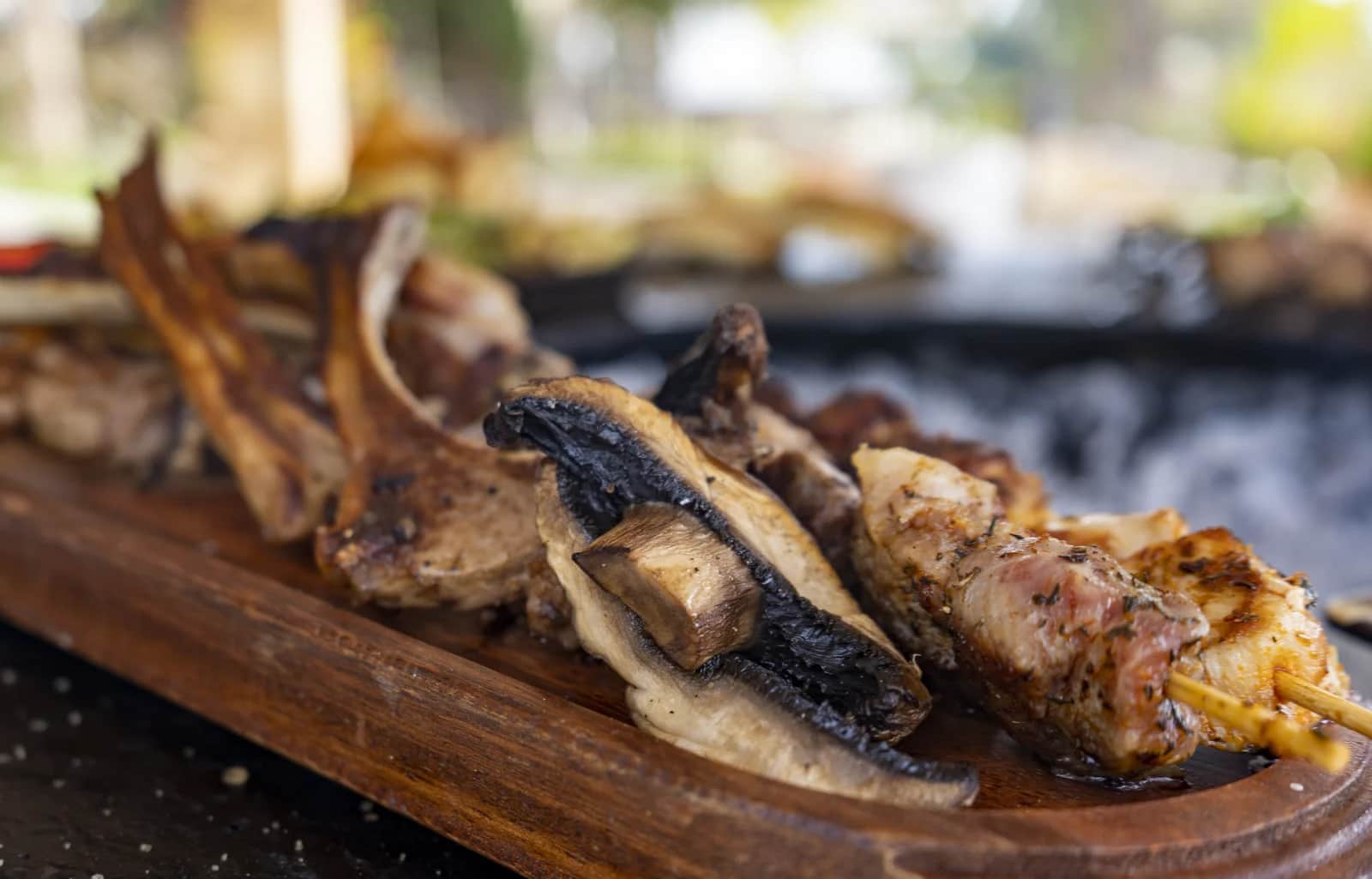
- Agios Mattheos — an authentic mountain village with tavernas serving grilled meats and country cooking that hasn't changed in generations. There are almost no tourists here — and that's exactly the charm.
- Kontokali and Gouvia — marina areas north of the city with quality fish restaurants and seaside bars.
When to go: a late lunch in the mountain villages (2:00–4:00 PM) is a relaxed experience, or dinner by the marinas.
What to avoid: don't drive the narrow lanes of the mountain villages after dark if you're not confident behind the wheel — the roads are winding and tight. It's better to arrive while there's still light.
If you'd rather not drive at all, a guided culinary tour of Corfu Town is a great way to taste the best spots with a guide who knows every hidden corner.
Practical Tips for the Smart Diner in Corfu Town
A handful of rules that will make every meal better and cheaper:
1. Eat late. The Greek kitchen comes alive after 9:00 PM. At that hour the food is fresh, the atmosphere is at its best, and the locals are all around you. 2. Drink local house wine. Corfu produces excellent wines. House wine from the barrel is almost always good and far better value than an imported bottle. 3. Ask about the dish of the day. Good tavernas cook according to the market. Whatever they recommend today — that's what's fresh. 4. Avoid places with a "barker" at the door. A restaurant that needs someone to pull you in from the street doesn't need you for its food. 5. Ask for an itemized bill. Especially with fish. It's perfectly legitimate and accepted. 6. Save room for dessert. Don't miss the Corfiot kumquat — a tiny citrus fruit that grows only here, served as a liqueur or as a preserve.
A common surprise to know about: a "cover charge" and bread are sometimes billed separately. This is legal and customary in Greece, but check that it's stated on the menu and doesn't surprise you on the bill.
Frequently Asked Questions About Restaurants in Corfu Town
How much does an average meal cost at a restaurant in Corfu Town? Prices vary by the type of place — a local taverna is significantly cheaper than a seaside fish restaurant. Fish by weight is the most expensive item, which is why it's important to agree on a price in advance. For current pricing, it's best to check directly with the restaurant, as prices are updated by season.
Do I need to book in advance? For local tavernas usually not, but for the more popular, higher-quality restaurants (like Venetian Well) it's definitely worth it at the height of summer — July and August. On Friday and Saturday evenings, booking is recommended at any sought-after spot.
Is there food suitable for people who don't like very spicy or heavily seasoned dishes? Absolutely. Greek cuisine is mostly mild — grilled meats, fresh salads, fish with lemon and olive oil. Only bourdeto (fish in spicy paprika) is a hot dish, and it's easy to avoid. Most dishes suit a wide range of palates.
Where is the best place to eat fresh fish? At seaside restaurants like Faliraki in town, or in the fishing villages outside the center. Always ask to see and weigh the fish before ordering.
What's the best time for dinner? After 8:30 PM, and ideally around 9:00 PM. This is when Greeks eat, the food is fresh and the atmosphere is authentic. Arriving at 7:00 PM will put you in an empty restaurant with a tourist-only vibe.
Can you eat well on a tight budget? Definitely. Souvlaki and pita wraps, shared mezze at a local taverna, and house wine from the barrel make for a filling, tasty meal at a comfortable price. Avoid the Liston and expensive fish, and you'll eat very well.
Conclusion: How to Eat Corfu Town Right
The secret to great food in Corfu Town isn't a big budget but the right knowledge: move away from the touristy squares toward the alleys of Campiello and the old town, seek out the tavernas where locals eat, order the unique Corfiot dishes — sofrito, pastitsada and bourdeto — and always, but always, agree on the price of the fish before ordering. Eat late like the Greeks, drink local house wine, and finish with a kumquat.
With this guide in your pocket, every evening in Corfu Town can become a genuine culinary experience rather than a tourist trap.
Want to taste the best without searching on your own? Join a guided culinary tour of Corfu Town and discover the hidden spots with a local guide, or get in touch to plan a personalized food experience. We're here to help you eat like a local — and go home hungry for more.