
Corfu Vacation Cost: How Much Does a Week-Long Family Trip Really Cost?
How much does a week in Corfu really cost for a family? A full breakdown of flights, lodging, food, transport and attractions — plus real money-saving tips without compromising the experience.

We've planned plenty of family vacations in Corfu and guided hundreds of families arriving on the island for the first time. The question that comes up almost every single time — even before "which beach is the prettiest" or "what's worth seeing" — is simple and practical: how much will this cost me? The answer, as always with budgeting, depends on dozens of small decisions: when you fly, where you sleep, whether you rent a car, and how many meals you eat out. In this guide we break the cost of a Corfu vacation into clear components, give realistic ranges, and share field-tested tips to help you build a smart budget with no surprises.
Key Takeaways
- Season is the single biggest variable — a vacation in September or May can cost up to 30%–40% less than August, with almost identical weather.
- The five core budget components: flights, lodging, local transport, food and attractions. Controlling just three of them already changes the whole picture.
- A rental car in Corfu is usually worth it for a family, replacing taxi and shuttle costs — though not essential if you choose a centrally located hotel.
- Food is an easy area to save — the right mix of local restaurants, markets and lodging with a kitchenette significantly lowers your daily spend.
- Booking 3–4 months ahead is the most powerful tool for staying on budget, especially for flights and lodging during peak months.
Where to Begin: The Overall Structure of Your Spending
Before we get into numbers, it helps to understand how an average family's budget pie splits across a week in Corfu. From our experience, the typical breakdown for a family of four looks roughly like this: flights take the biggest slice, followed by lodging, and then a similarly sized trio of food, transport and attractions.
This matters because it tells you where to direct your saving efforts. There's no point haggling over the price of breakfast if you've chosen to fly at the peak of August without booking ahead — that's where the big money is. On the other hand, a family that has already locked in a good flight price can "play" with the food and attractions components without hurting the experience.
Insider tip: Set a daily budget for everything that isn't flights or lodging (i.e., food, transport, fun) and divide it into daily envelopes. That way you'll know in real time whether you're on track, instead of discovering surprises only at the end of the trip.
Flights to Corfu: The Most Volatile Component
The flight is the largest and most flexible expense. In summer there are many direct flights to Corfu, which significantly shortens travel time compared to connecting through Athens or another European hub. A direct flight takes around two and a half to three hours — especially convenient for families with children.
When to book: Experience shows that 3–4 months ahead is the sweet spot. Those who wait until the last minute during July and August pay far more and sometimes find no seats at all. If you're flexible with dates, a midweek flight is almost always cheaper than a weekend one.
Common mistake: Ignoring baggage costs. Low-cost carriers display a tempting base price, but once you add suitcases for a family of four, the gap narrows dramatically. Always calculate the final price including baggage, seat selection and insurance.
Money-saving tip: Consider flying in late September or early October. The sea is still warm, the island is quieter, and prices drop. It's one of the simplest ways to dramatically lower your Corfu vacation cost without giving up pleasant weather.
Lodging: From a City Hotel to a Village Villa
Lodging in Corfu is highly varied, and this decision also affects the rest of your budget. Here's the main comparison we present to families:
- Hotels in the Corfu Town area — convenient for those who want to be close to attractions, restaurants and nightlife, and they save on transport. Ideal if you're not renting a car.
- Resort complexes in beach areas (such as Dassia, Gouvia or Moraitika) — usually include a pool and family amenities, excellent for a relaxing vacation, but sometimes require a car.
- Holiday apartments and villas with a kitchenette — the most economical option for families, since they let you cook and save on meals. Perfect for stays of a week or more.
- Lodging in inland villages (such as nearby Paleokastritsa) — a blend of scenery, quiet and attractive pricing, at the cost of some distance from the center.
Insider tip: For a week's stay, an apartment with a kitchenette almost always beats a hotel on budget for families. Even if you eat out most evenings, the ability to prepare breakfast and keep water and snacks chilled saves a meaningful cumulative sum. Before choosing, it's worth browsing the lodging and hotels we recommend in Corfu to understand the range of options by area.
Getting Around Corfu: Rental Car vs. Public Transport
This is one of the most important budget decisions, and it also shapes the quality of your vacation. Corfu is a relatively large island, and its most beautiful attractions are spread along its length — beaches in the north, villages in the west, quiet coves in the south. Without flexible transport, a large part of the island stays out of reach.
Rental car: For a family, this is usually the most cost-effective and convenient option. One car replaces dozens of taxi or bus rides, and lets you reach hidden beaches and stop in villages along the way. If you're considering it, you can explore the range of rental cars suited to families and plan your outings accordingly.
Public transport: Corfu is served by a bus network (the green line for longer trips and the blue line for the town area). It's a very cheap option for those staying in a central location who don't plan to move around much, but it requires planning, frequency drops in the evening, and it's hard to coordinate with small children and rigid schedules.
Airport transfers: Arrival and departure are moments when it's worth booking a private, comfortable transfer service in advance, especially with suitcases and tired children after a flight. It saves the wait and the haggling over taxis.
Common mistake: Renting a car that's too small to save money, then discovering there's no room for luggage and a stroller. For a family, a bit more space is worth it for the comfort.
Food and Restaurants: Where Money Is Saved or Spilled
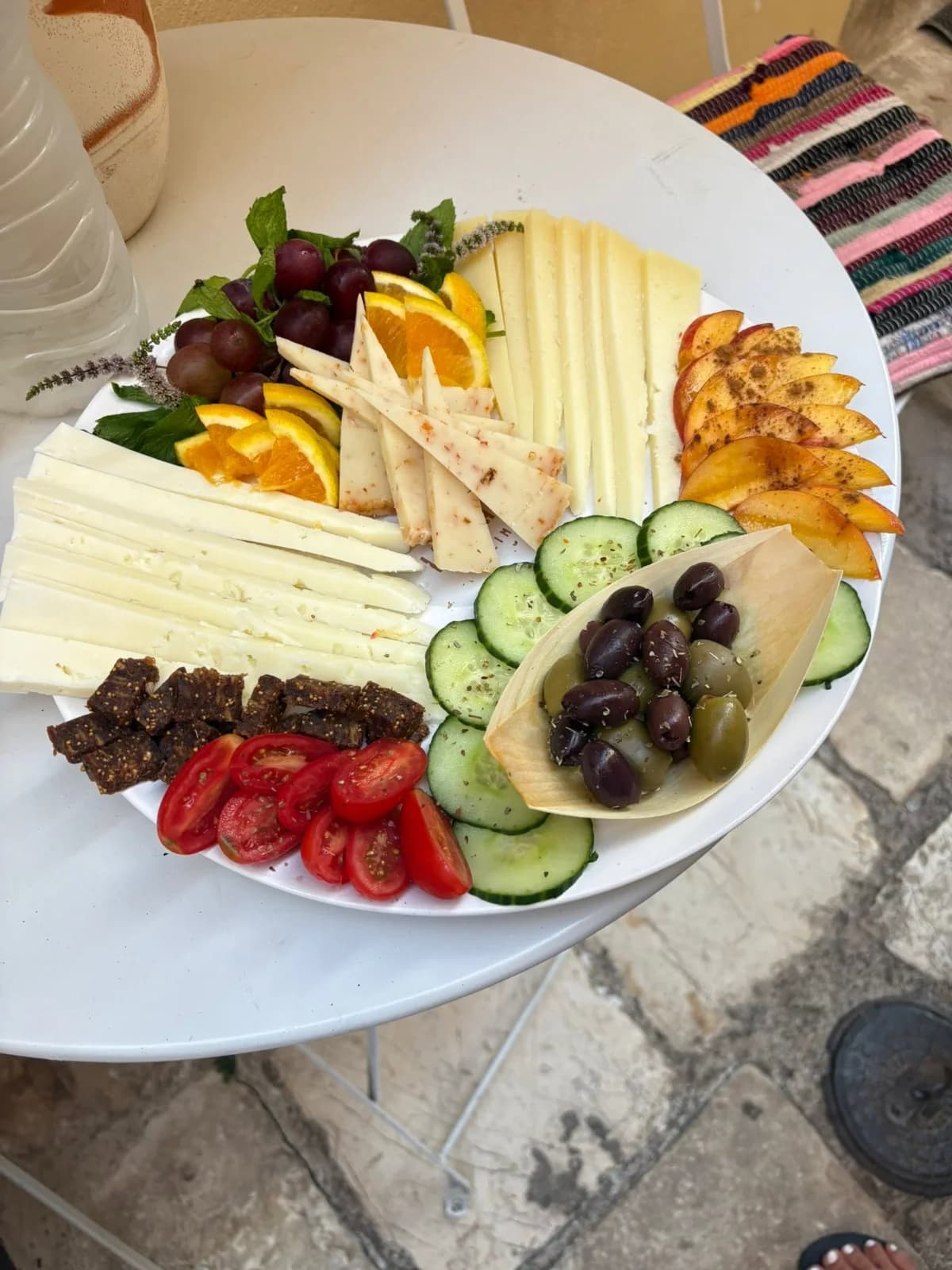
Food in Corfu is part of the experience, and the good news is you can eat wonderfully without emptying your wallet. The local cuisine is built on simple, fresh dishes — fish, vegetables, local cheeses, and island specialties like pastitsada (meat in tomato sauce with pasta) and sofrito.
How to divide your food budget wisely:
- Breakfast — if you have a kitchenette, make it yourself. This is the easiest meal to save on.
- Lunch — light and cheap: souvlaki, gyros or a Greek salad at a local taverna instead of a tourist restaurant.
- Dinner — here you can treat yourselves. Choose an authentic taverna in a village rather than one on the main waterfront in town, and the price drops without sacrificing quality.
Insider tip: Stay away from the restaurants sitting right on the main promenade of the Old Town — you pay a premium for the location there. Just two streets inland you'll find tavernas where locals eat, at higher quality and a friendlier price. For those who want to dive deeper into the culinary experience, a food tour in Corfu Town is a great way to get to know the local dishes with guidance, and to know where to return on your own afterward.
What to bring: Reusable water bottles. Tap water in most areas is safe to drink, which saves constant buying.
Attractions and Activities: How Much to Allocate for Fun
This part is highly flexible, because Corfu offers an abundance of free experiences alongside paid attractions. The beaches, walks through the Old Town (a UNESCO World Heritage Site) and the view from Paleokastritsa cost nothing but transport.
Here are a few specific experiences worth budgeting for:
- Renting a boat for a day at sea — one of families' favorite experiences, allowing you to reach coves you can't get to by land. You can review the boat and yacht rental options by family size. Note that most small boats don't require a license.
- Paleokastritsa — a clifftop monastery, turquoise water and small beaches. Allocate half a day. Arrive early in the morning to beat the tour buses.
- Achilleion Palace — an impressive historic palace built by Empress Elisabeth of Austria ("Sisi"), with gardens and a view of the town. A one- to two-hour visit suits children too.
- The Old Town and the fortresses — free wandering through the Venetian alleys, climbing to the Old Fortress for a viewpoint. Almost free and full of charm.
Those who'd rather have someone else plan the day and spare them the logistics headache can browse the range of organized tours and excursions and slot a guided day or two into their independent vacation.
Insider tip: Combine "expensive" days (a boat, an organized tour) with "free" days (beach and town). This balance protects your budget without giving up peak experiences.
Planning Table: How the Budget Shifts by Vacation Style
To give a practical picture, here's a comparison of three vacation styles for a family. The actual sums vary by season and availability, so we focus on the ratio and the budget logic:
| Component | Budget vacation | Balanced vacation | Indulgent vacation |
|---|---|---|---|
| Season | May / October | June / September | July / August |
| Lodging | Apartment with kitchenette | Hotel/resort complex | Villa with pool |
| Transport | Bus + walking | Small rental car | Spacious car + transfers |
| Food | Self-catering + tavernas | Balanced mix | Restaurants and outings |
| Attractions | Beaches and town (free) | Boat + one attraction | Private tours + yacht |
The table illustrates that the gap between budget and indulgent isn't necessarily in the quality of the experience, but in the choices. A family that spends its time at sea, on the beaches and in the Old Town can enjoy a perfect vacation on a completely moderate budget.
Five Tried-and-Tested Tips for Real Savings
Over the years we've distilled a few principles that recur among families who finish their vacation satisfied both emotionally and financially:
1. Choose a smart season. The shoulder season (May–June and September–October) is the big secret: excellent weather, fewer crowds and far friendlier prices. It's worth reading more about the advantages of a Corfu vacation in the low season before locking in dates. 2. Book the rigid components early. Flights, lodging and a rental car are the things that get more expensive as the date approaches. Lock them in early and you've captured most of the saving potential. 3. Cook at least some of your meals. Lodging with a kitchenette pays for itself within a few days. 4. Balance "money" days with "free" days. Not every day has to include a paid attraction. 5. Concentrate your shopping in local markets and supermarkets. Water, fruit, snacks and basics are far cheaper in a supermarket than at the kiosks on the waterfront.
Frequently Asked Questions
How many days should I allocate for a Corfu vacation? A week is the ideal length for a family — enough to combine beach days, a day or two of trips and attractions, and a day at sea on a boat, without feeling rushed. For those who want full relaxation, even ten days are well justified.
Is renting a car in Corfu a must? Not a must, but for a family it greatly upgrades the experience and is usually worth it. Those planning to spend most of their time in one area and who chose central lodging can get by with buses and walking, and rent a car for just a day or two of touring.
When is it cheapest to fly to Corfu? The shoulder seasons — late May, June, and September through early October — offer the best ratio of price to weather. August is the most expensive and crowded month.
Can you really do a Corfu vacation on a low budget? Absolutely. Combining the right season, an apartment with a kitchenette, public transport or a small car, and making use of the free beaches and Old Town allows for a quality vacation on a very moderate budget.
How much should I budget for food per day for a family? It depends entirely on style. A family that makes its own breakfast and eats a light lunch will spend far less than one eating three restaurant meals. It's best to plan in advance how many meals out you'll have per week and keep the rest home-based.
Is renting a boat worth the cost? In our opinion, yes — it's one of the unforgettable experiences in Corfu. A single day at sea, with access to secluded coves, justifies the expense even for budget-minded families, especially if you split the day with another family.
Conclusion: A Smart Budget, a Worry-Free Vacation
The cost of a Corfu vacation isn't a fixed number but the result of decisions — when you fly, where you sleep, how you get around and how you eat. The good news is that each of these decisions has an economical version that doesn't hurt the experience, and sometimes even improves it (like visiting in the quiet season). A family that plans ahead, chooses a wise season and blends peak days with restful ones can enjoy one of Greece's most beautiful destinations on a perfectly reasonable budget.
Ready to plan your family vacation in Corfu without the headache and without budget surprises? The Corfu Paradise Tours team is here to help you put together a package that fits your style and budget exactly. Get in touch with us and we'll build the perfect trip together — from the flight to the boat.